Start with your operation
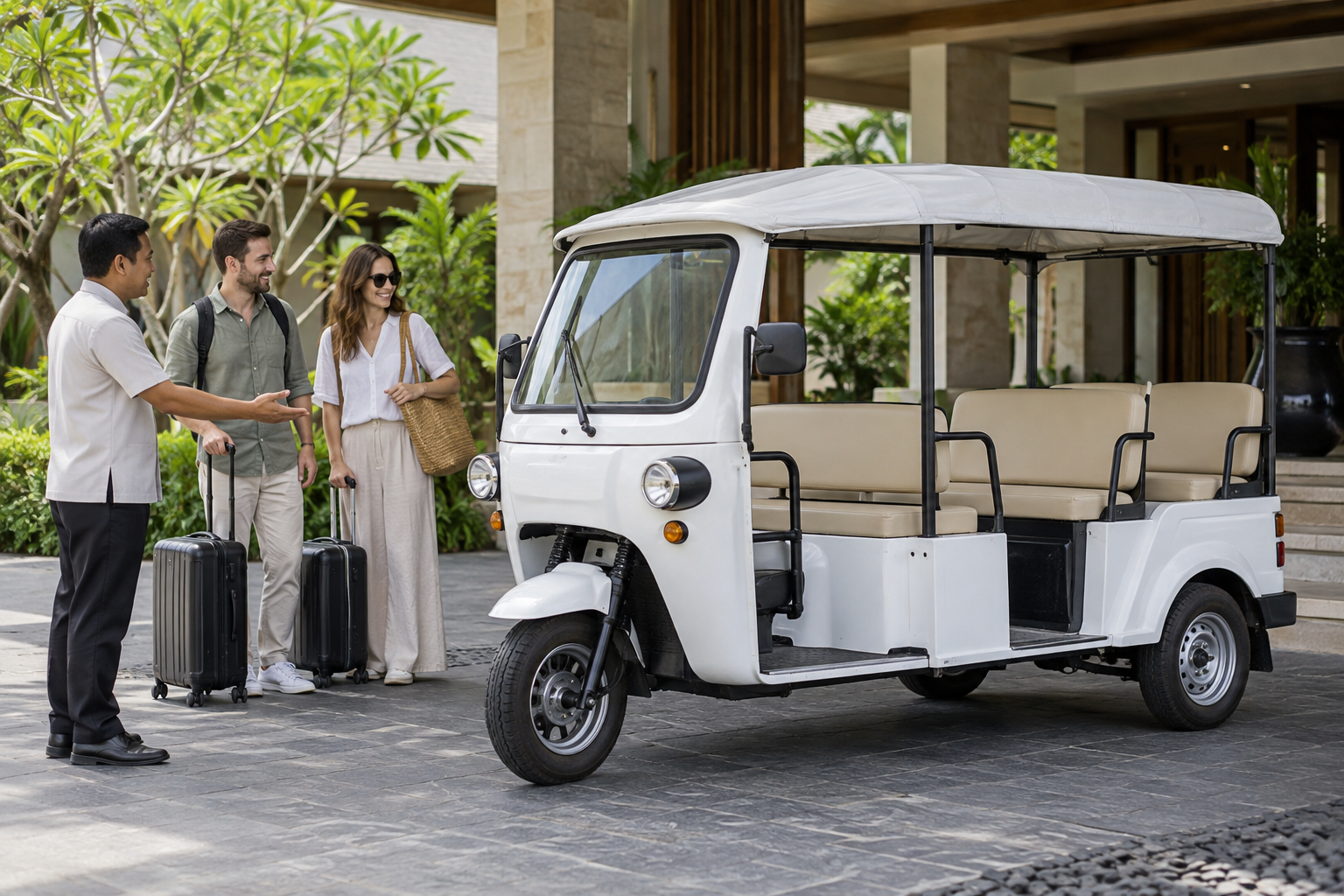
A resort, campus or visitor attraction needs vehicles that fit its transport service. Start with who travels, what they carry and where the vehicle goes. 'Golf cart' and 'passenger shuttle' describe broad uses; neither name alone defines passenger capacity, hill performance or permission to use public roads.
Write the service brief before choosing the body
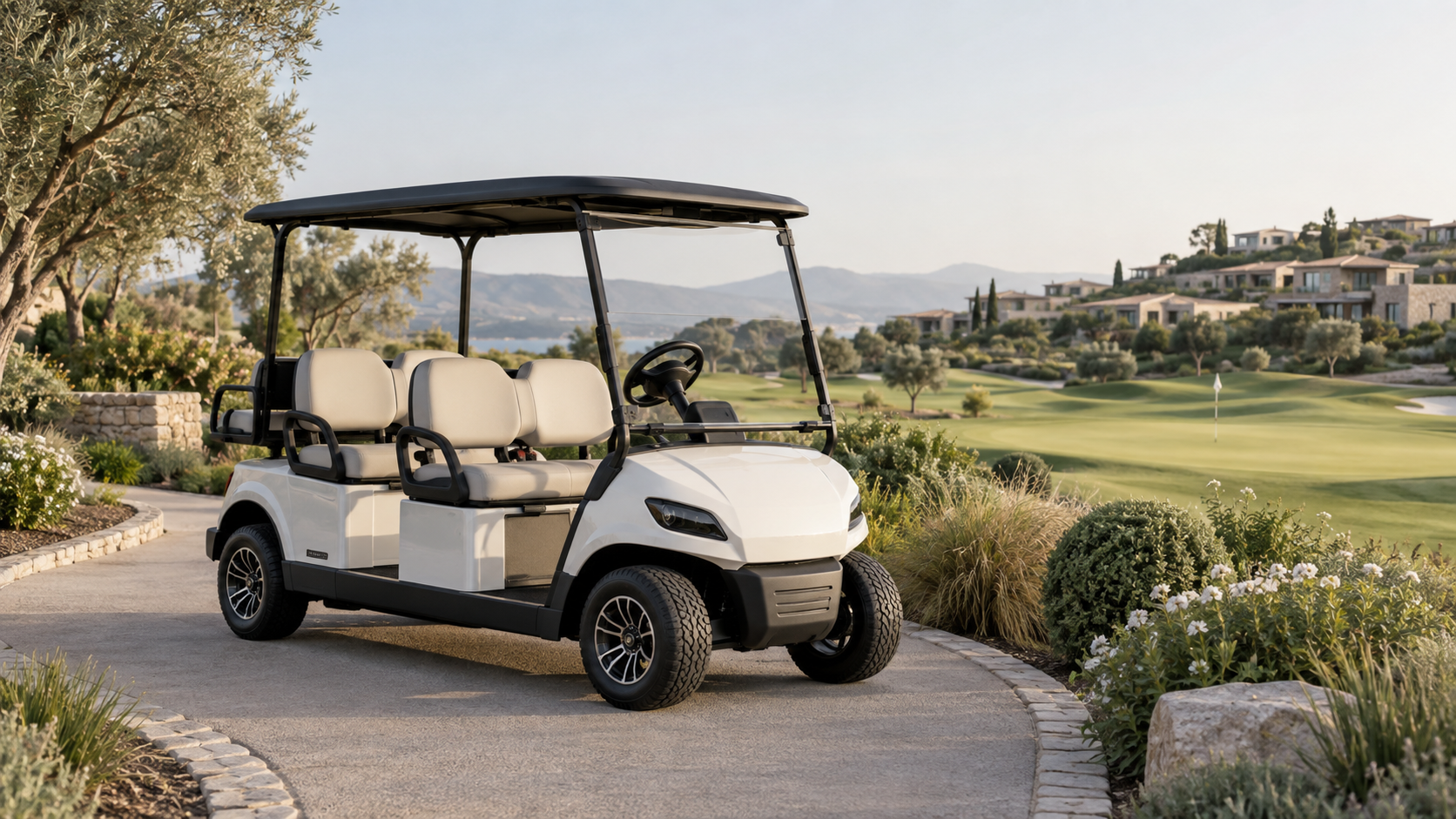
For golf-course use, describe player movement, golf bags and access to course paths. For a shuttle route, describe passenger peaks, trip frequency, boarding stops and luggage. Include staff transport or maintenance tasks if vehicles will have shared duties.
Ask for drawings showing the proposed seating and cargo arrangement. A manufacturer's configurable vehicle illustrates why this matters: Club Car describes a rear-seat option that exchanges two passenger positions for cargo space. Treat that as a configuration example, not a specification for another vehicle. Club Car: Villager 6 configurations.
Count passengers, luggage and boarding time together
State the maximum occupants and clarify whether the quoted seat count includes the driver. Add expected luggage and equipment mass, then request the permitted total load for the exact configuration. Specify seating orientation, restraints, handholds, steps and weather protection as requirements to confirm.
Describe the boarding needs of the intended users, including anyone requiring assisted access. If wheelchair transport is required, request a purpose-designed configuration and evidence for its access and securement arrangements. During a pilot, measure boarding and unloading time as well as journey time; both belong in a realistic service timetable.