Start with your operation
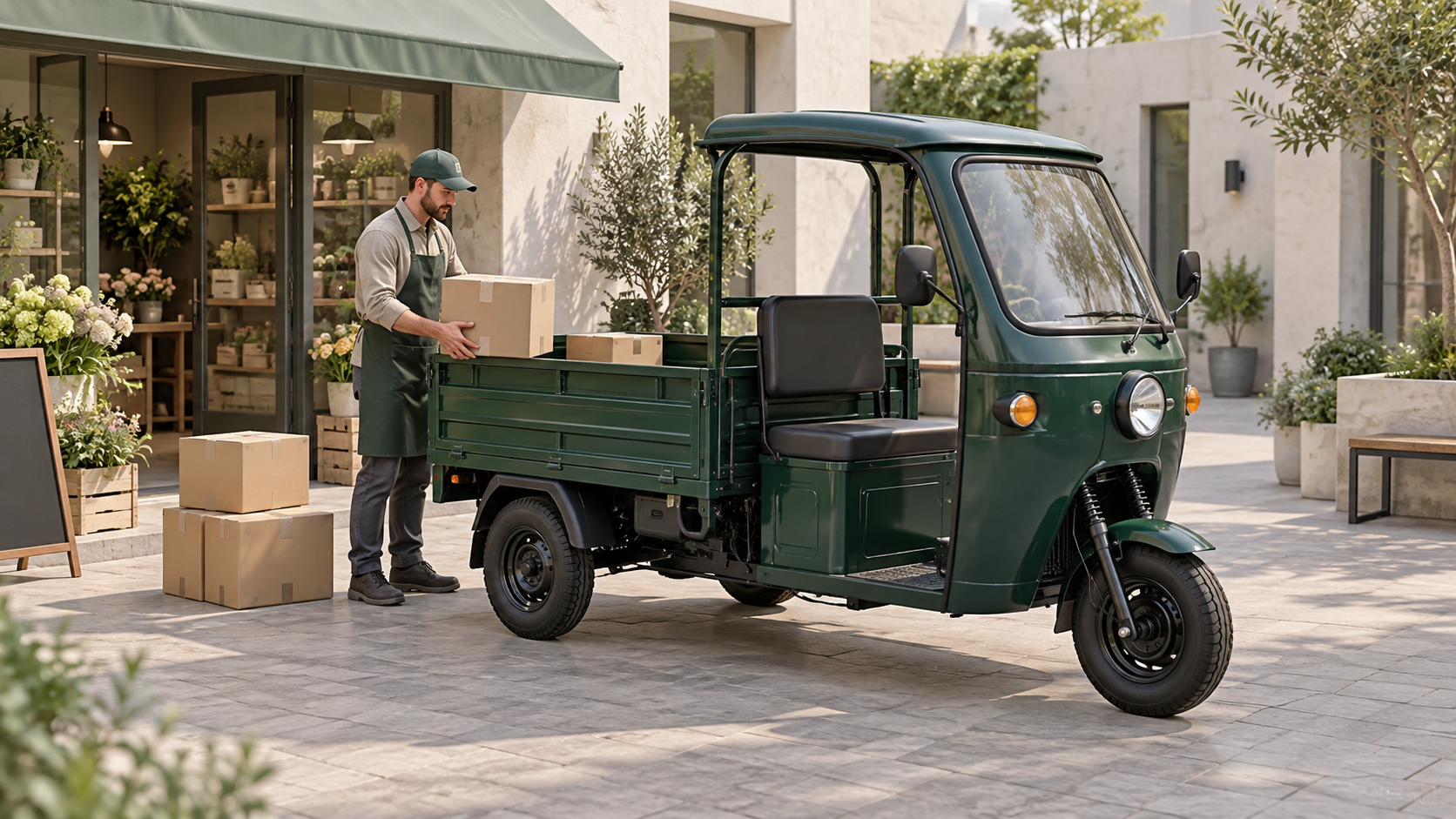
An electric cargo tricycle should be specified around the goods it must move and the route it must complete. A catalogue payload or range figure is only a starting point. Use the following purchasing brief to make supplier responses comparable before committing to a wholesale order. For maintenance rounds, internal supplies or mobile vending, use the same load, route and battery checks to compare utility tricycles, then confirm any task-specific equipment and power requirements separately.
Define the load as a complete working configuration
List the cargo's typical and maximum mass, dimensions and handling requirements. Include the driver, body, tools and fitted equipment when checking the supplier's permitted total vehicle mass. Ask how 'payload' is defined and whether quoted capacity changes with the selected cargo box or accessories.
Request loading diagrams, securing points and written load limits. Transport for London's cargo bike standard identifies load weight, size, position and securing as factors affecting stability and braking. Its guidance concerns cargo cycles; it does not establish approval for a motorized cargo tricycle. TfL: cargo bike safety standard.
Describe the route before selecting the drivetrain
Provide daily distance, stop frequency, maximum gradient, hill length and expected speeds. Add road surface, tight turns, loading access, gate widths and seasonal temperatures. State whether the vehicle will operate within a site, on public roads or across both.
Ask for a configuration assessment against that route, including loaded hill starts, downhill control and parking on the actual slopes. Identify who will confirm destination-specific classification and operating requirements. Keep the route description attached to every quotation so a change in motor, gearing, tires or body can be reviewed against the same job.