ELECTRIC VEHICLES · FACTORY-DIRECT SOURCINGENQUIRIES ON WHATSAPP

FACTORY SUPPLY · DISTRIBUTORS & FLEET OPERATORS

Battery Swapping for Tuk-Tuk Fleets & Local Dealers

A local service-station model for drivers without home charging: exchange the battery at the station while your business manages charging and spare packs.

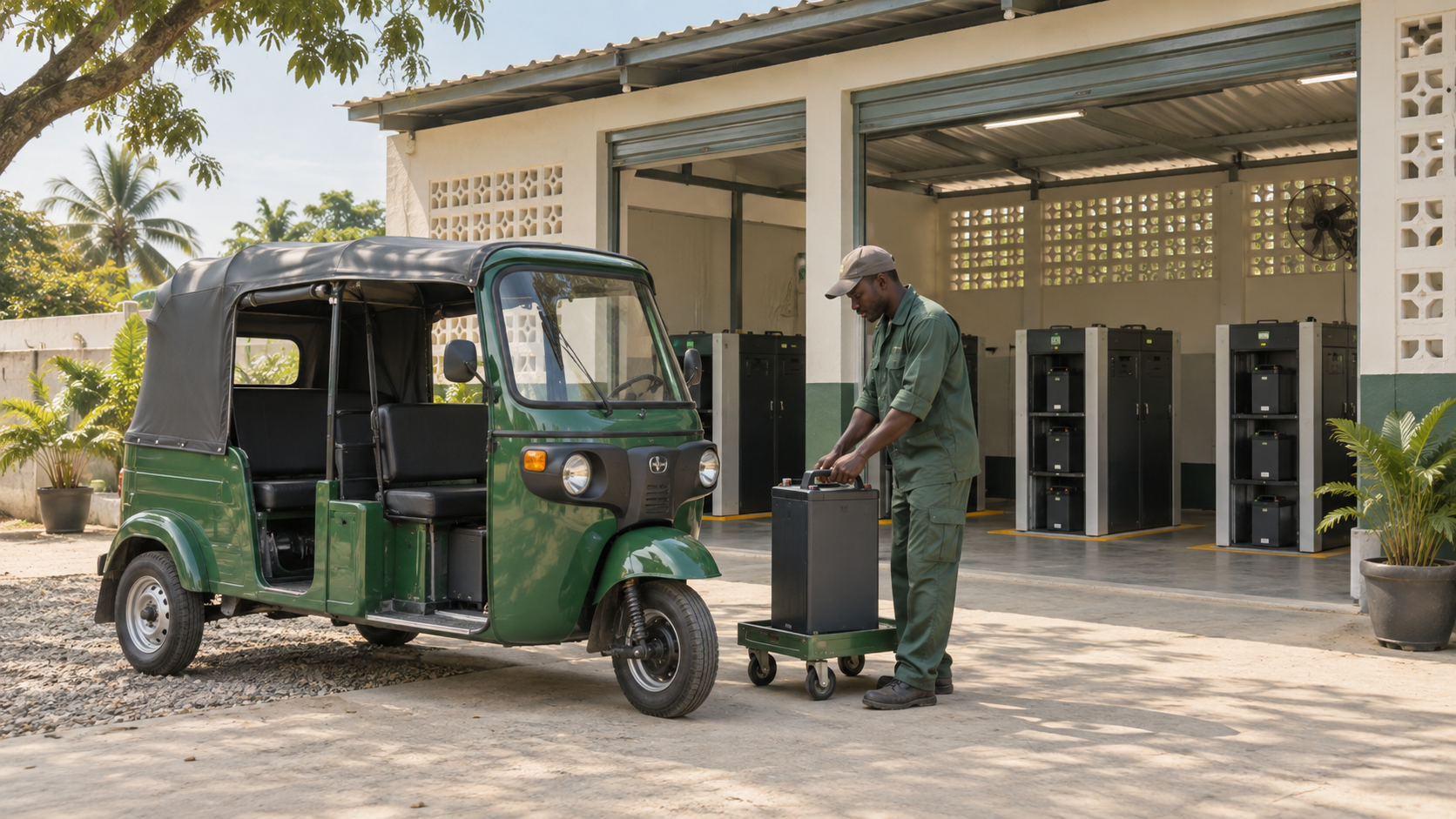
Green electric passenger tuk-tuk beside a worker with a battery trolley in front of battery cabinets.

Start with your operation

Which operating problem needs solving?

As a local wholesaler, you can purchase a pool of compatible spare batteries and operate a staffed service point. Drivers bring their tuk-tuks to exchange a depleted battery for a fully charged pack, then continue their route. Returned batteries are connected to matching chargers at the station and prepared for the next customer.

  1. 01

    Choose the fleet and service location

    Drivers have no practical place to charge.

    Start with your city, taxi routes and fleet size. Choose an accessible service point with suitable power and staff to operate it.

  2. 02

    Purchase a matched battery pool

    A charged pack must match the vehicle.

    Plan vehicles, compatible spare batteries and matching chargers together. Confirm battery access, securing and electrical connections, plus the equipment included in the quotation.

  3. 03

    Organize the local swap service

    Customers need a clear place and process.

    Your business manages the service point, exchanges, central charging and stock records. Agree customer charges, battery responsibility and service terms locally.

  4. 04

    Size the station before expanding

    Demand and charging time determine spare stock.

    Use daily distance, shift patterns, charging time and peak demand to plan battery and charger quantities. Pilot the service and review availability and operating costs before adding sites.

Drivers swap. Your station recharges.

The driver's journey

  1. Arrive at the station

    Bring the vehicle and its depleted battery to your local service point.

  2. Exchange the battery

    Station staff replace it with a fully charged, compatible pack.

  3. Continue the route

    The driver leaves with the charged battery; the returned pack stays at the station.

The station's battery cycle

  1. Receive the returned pack

    Record the exchange and check the returned battery's condition.

  2. Charge at the station

    Connect the returned pack to a matching charger at the central charging area.

  3. Return it to ready stock

    After charging and checks, the pack is ready for another customer.

This moves charging from each customer's home to your service point. The station still needs suitable power, charging capacity and enough compatible spare batteries.

Build your purchase case

Build a workable vehicle and service plan

Use documented specifications, configuration choices and ordering steps to turn your shortlist into a clear purchasing brief.

What to share for your proposal

  • Country, city, intended service location and taxi routes.
  • Vehicle models, fleet size, daily distance and operating hours.
  • Available station power and the number of batteries that can charge together.
  • Expected customers and peak exchange demand; required batteries and chargers are sized for the project.
  • Requested supply scope: vehicles, batteries, chargers, spares and support.

Product categories

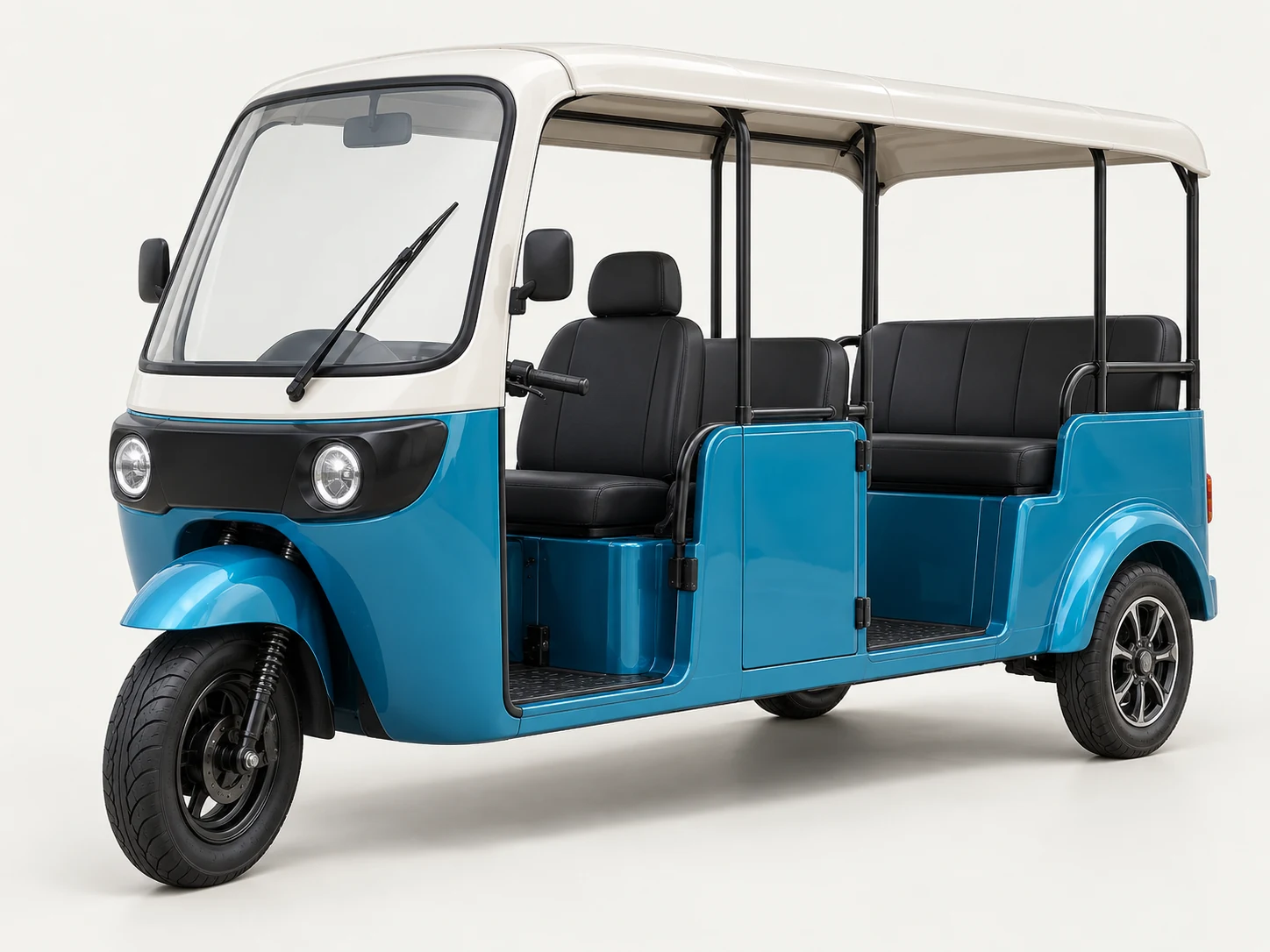
Blue electric passenger tuk-tuk with open sides, a white roof and black bench seats.

Passenger

For fleet and distributor projects in Kenya, Uganda, Ethiopia and other destinations. Start with the city, passenger demand, turning space and charging access.

Share your city, route, passenger requirement and charging window to shape a comparable manufacturer quotation.

Explore category
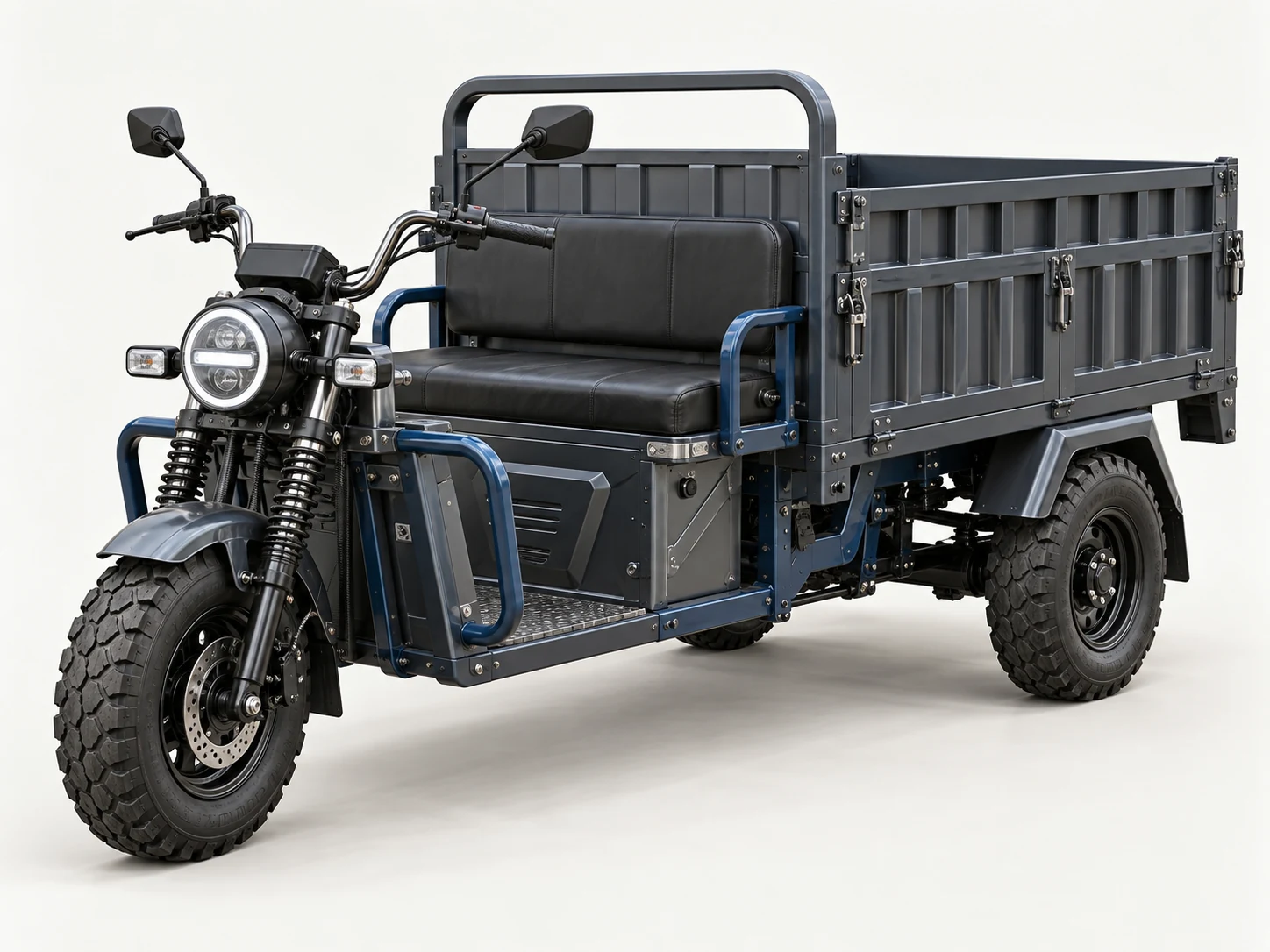
Dark gray electric cargo tricycle with an open rear bed and tall side panels.

Cargo

For parcel rounds, wholesale-market deliveries and depot transfers: match usable cargo space and loading access to the goods you move.

Send goods dimensions, combined load, route conditions and charging time to request a comparable freight-vehicle quotation.

Explore category
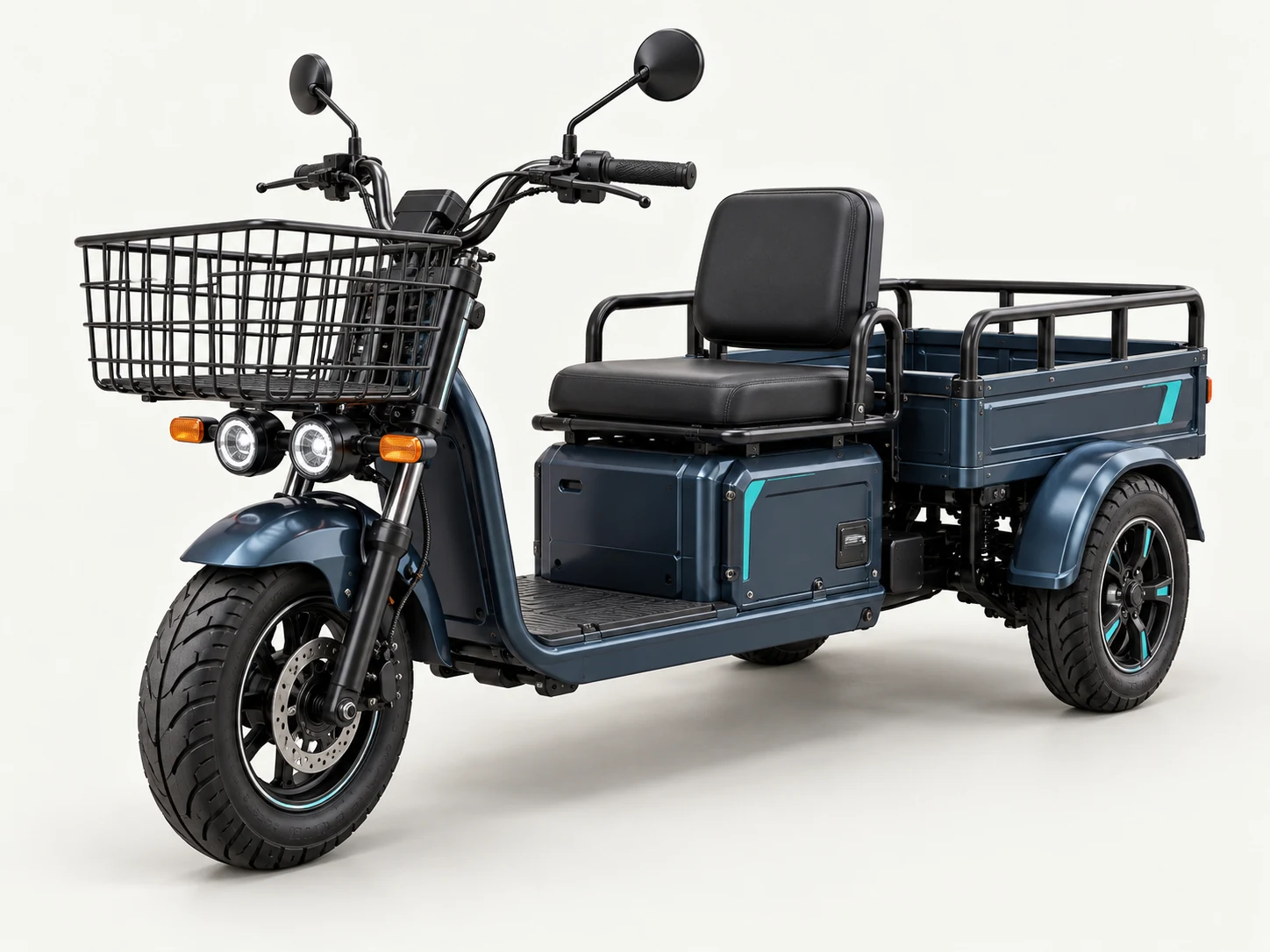
Compact electric utility tricycle with a front basket and small rear cargo bed.

Utility & business

Build the vehicle around the job: tools and equipment, supply movements or a mobile retail workspace.

Share the work process, equipment dimensions and site access for a configuration-based quotation.

Explore category

A purchase your team can assess

Choose around the working route.

Give operations, purchasing and finance the same basis for comparing a vehicle configuration and its order scope.

Scroll across the table to read every purchasing check.

Purchase decisionCompare the information hereInclude in your project brief
Useful passenger or load spaceRead the selected model's listed seating, body dimensions and load figures together with their qualifications.Peak passenger count or goods dimensions and weight; luggage, gates and loading access.
Charging within the working dayUse the reported battery and charging information as a starting point, rather than treating a listed range as a shift guarantee.Daily distance, shifts, parked time, power supply and any existing battery-swap setup.
A comparable order priceKeep the vehicle reference, included equipment and complete-vehicle or CKD/SKD format consistent when comparing proposals.Initial quantity, battery and charger configuration, packing format, delivery location and proposed shipping terms.
A representative route checkUse a sample with the agreed configuration to evaluate the actual job before increasing the order.Representative passengers or load, surfaces, gradients, turning and braking checks, and the results to record.
Start my commercial fleet brief

Build your purchase case

Start with a sample. Plan the larger order.

Complete tuk-tuk and golf cart orders can start with the minimum below. Agree your configuration and sample checks before committing to a larger fleet.

Complete tuk-tuk & golf cart orders

Minimum order
1 vehicle
Sample production
About 15 days
Bulk production
Usually about 2 months

Share your order quantity for a sample-fee quotation.

Production estimates depend on order quantity. Confirm the production schedule and shipping time with your quotation. CKD/SKD kit minimum quantities and production timing require a separate model-specific quotation.

Enquiry form

Request a proposal for your operation

Share your destination, daily route, peak passengers or goods load and initial quantity. Add your charging window and required delivery date to focus the configuration and quotation discussion.

  • Keep the selected vehicle and the operating task together.
  • Separate the vehicle configuration from packing and delivery requirements.
  • Define the checks your representative sample needs to pass.

Submit the form to send your requirements to TukNova, or contact us directly on WhatsApp.

Tell us about your operating route

Describe the work the vehicle must do. An initial quantity estimate is enough to start the discussion.Fields marked * are required. Enter a positive whole number for quantity.

By submitting, you send these details to TukNova so we can prepare a quotation and reply to your enquiry.

WhatsApp